
HUID Hallmark Explained: What Gold Buyers in Kerala Check Before They Buy Your Gold
If you have bought gold jewellery in the last few years, you may have noticed a short code stamped on it, or printed on the bill. That code is the HUID. Many sellers wonder whether it changes what they will be paid, and whether jewellery without it can still be sold. As one of the established gold buyers in Kerala, Best Money Gold explains what HUID means, what it does not mean, and how it fits into the valuation of your gold.
HUID stands for Hallmark Unique Identification. It is a six-character alphanumeric code that identifies one specific piece of hallmarked jewellery. It helps confirm that the piece was tested and certified when it was sold. It is not the only way to establish purity. At Best Money Gold, your offer rests on the purity and weight confirmed at the time of sale, as explained in our guide to how we calculate your gold’s value.
What Is HUID?
HUID is a unique code given to each piece of jewellery when it is hallmarked at a centre recognised by the Bureau of Indian Standards (BIS). No two pieces share the same code. The code is linked to a record of the piece, so its hallmark details can be checked later.
Hallmarking exists to protect buyers. It is an independent confirmation that the gold in a piece matches the purity claimed on it. Before HUID, a jeweller could stamp a purity mark, but there was no easy way to trace that mark to a specific test record. HUID closes that gap by giving every piece its own identity.
What a Current BIS Hallmark Contains
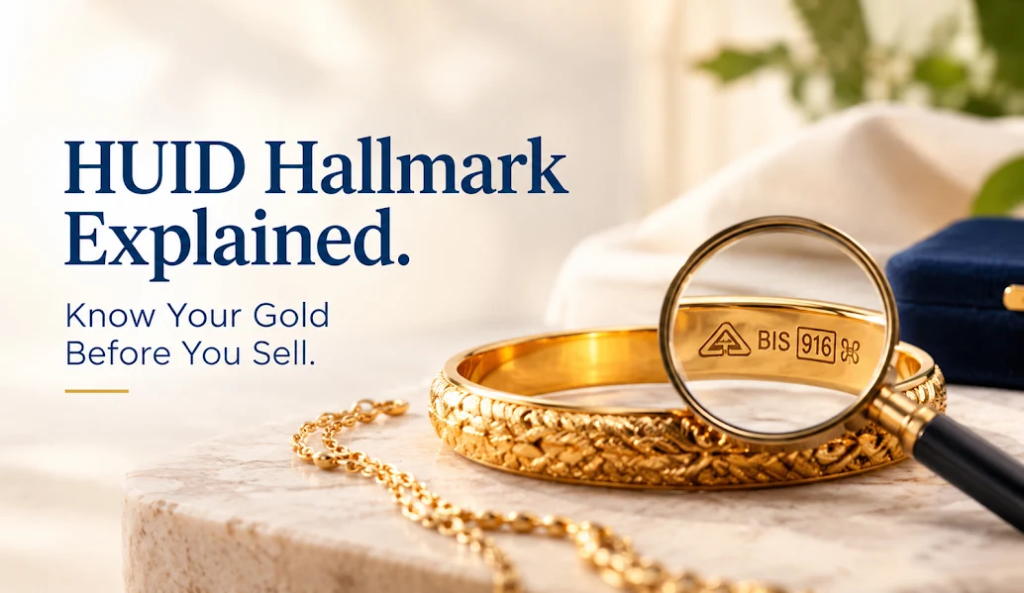
A hallmarked piece in India now carries three marks:
- The BIS logo, showing the piece was certified under the BIS scheme.
- The purity grade, such as 22K916 or 18K750.
- The six-character HUID code.
Our explainer on 22KT, 18KT and 916 hallmark gold covers what the purity numbers mean. HUID sits on top of that as the individual identity of the piece. Think of the purity grade as the “what” and the HUID as the “which one.”
HUID vs the Older 916 Stamp
Many families own jewellery with only the older “916” or “22K” stamp, made before HUID became part of the hallmark. This is very common in Kerala, where gold is often passed down for decades and kept long after the original bill is gone.
Both types of jewellery can contain real gold of a stated purity. The difference is how easily that purity can be traced back to a test record. For a seller, this means older pieces are not “lesser” gold. They simply rely more on a fresh test to confirm what they contain.
Does HUID Change What You Are Paid?
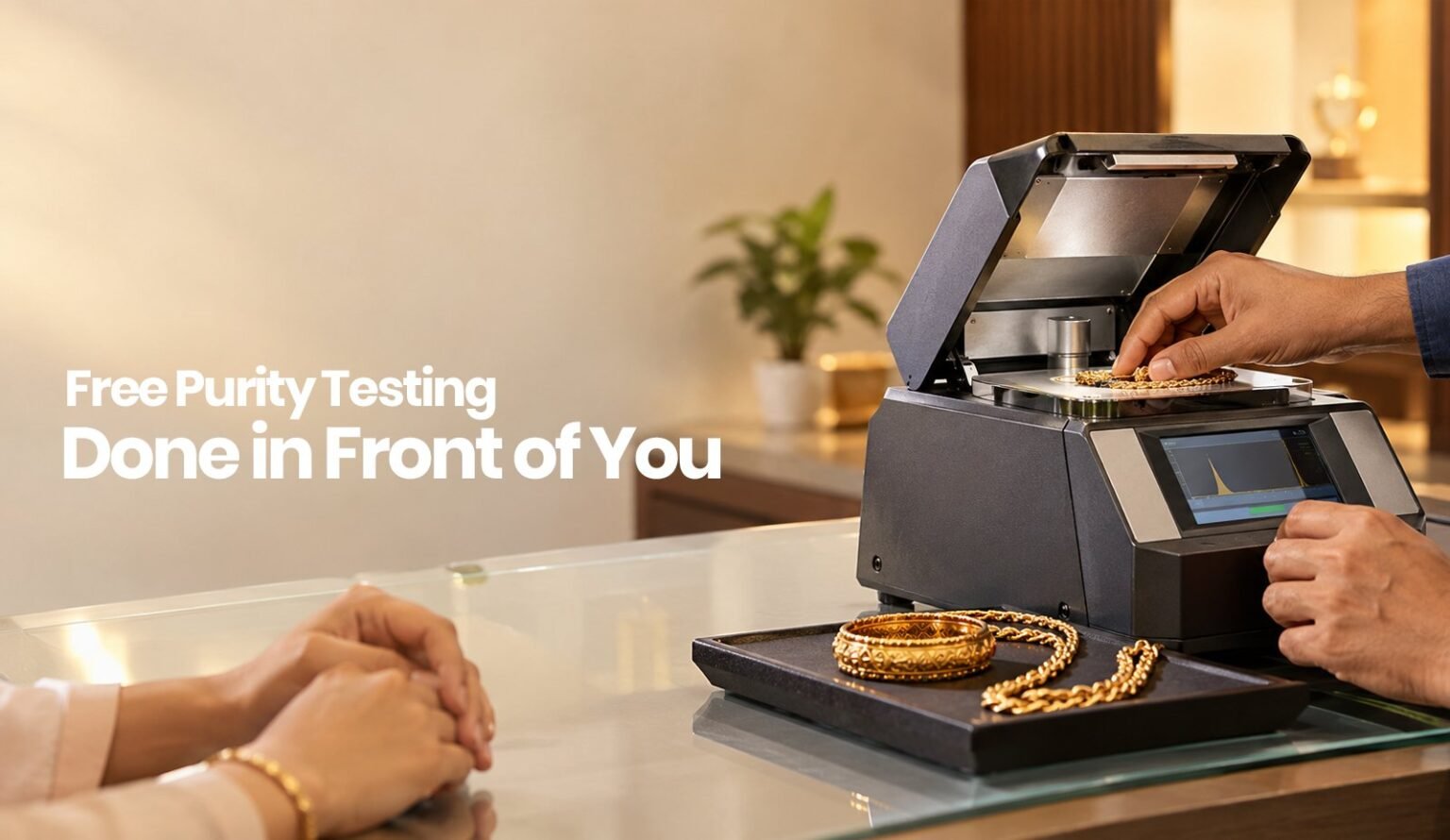
Your payout depends on three things: confirmed purity, weight, and the day’s rate for that purity. A HUID helps support the purity claim, but purity is still confirmed by testing at the branch. Our process is described in detail in how we test your gold’s purity.
Jewellery without a HUID can still be tested and valued. Older pieces, ancestral jewellery and items from small local jewellers often fall into this group. They are not turned away for lacking a code. The test result, not the stamp, sets the figure.
VALIDATE: confirm with Best Money Gold that HUID presence has no effect on rate or acceptance at any branch before publishing this section.
Why Hallmarked Jewellery Still Gets Tested
A natural question is why a buyer tests gold that already carries a hallmark. There are three practical reasons.
- Wear: Stamps fade, and a mark that is hard to read cannot be relied on.
- Repairs: A piece repaired or soldered later may contain metal that differs from what the original hallmark described.
- Confirmation: Testing at the time of sale gives both sides one agreed, current figure.
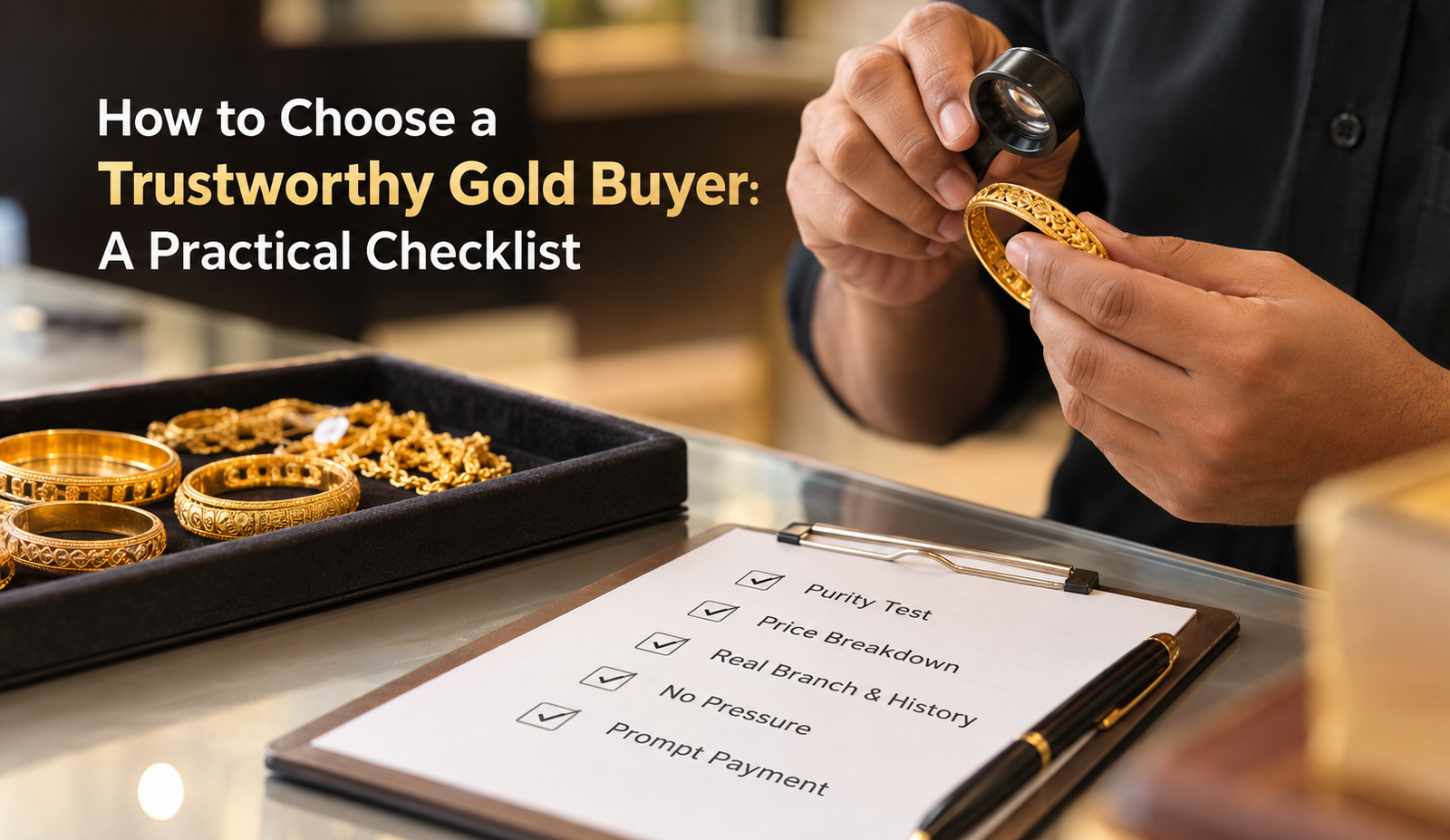
This is why a trustworthy buyer tests every piece first and discusses price after, whether or not a HUID is present.
Where to Find the HUID on Your Jewellery
- Look closely at the inner surface of the piece, near the clasp or along the edge. A magnifying glass helps, as the marks are small.
- Check your original jewellery bill, which should list the HUID for each hallmarked item.
- Remember that one bill can list several codes, one for each piece purchased.
BIS also provides an official way to verify a HUID so you can confirm a code is genuine. Check the BIS website for the current verification method before relying on any third-party tool.
What to Do If Your Jewellery Has No HUID
Do not worry. Missing HUID is not a sign of fake gold. It usually means one of the following:
- The jewellery was made before HUID rules applied.
- It was inherited and has no paperwork.
- It was made by a local goldsmith who did not hallmark it.
In each case, the practical step is the same: bring the piece for a purity test. If your jewellery is inherited, our post on selling ancestral gold speaks to the common concerns families have when selling pieces that carry personal history.
What to Bring When You Sell
Bring valid ID and your jewellery. The original bill is helpful if you have it, but valuation rests on testing. Our documentation checklist lists exactly what to carry so your visit is smooth. If a piece is broken or damaged, it can still be valued. Our guide to selling old, broken and scrap gold explains how.
What This Article Covered
This article explained what HUID is, what a current BIS hallmark contains, how HUID differs from the older 916 stamp, and whether it changes your payout. It also covered why hallmarked jewellery is still tested, where to find the code, and what to do when a piece has none. For anyone comparing gold buyers in Kerala, the key point is simple: a trustworthy buyer tests purity directly and explains the result, with or without a HUID.
Frequently Asked Questions
What does HUID stand for? Hallmark Unique Identification. It is a six-character code unique to one hallmarked piece of jewellery.
Can I sell jewellery that has no HUID? Yes, in general. Purity is confirmed by testing at the branch. Older jewellery without a HUID is common and can be valued.
Is HUID the same as the 916 mark? No. The 916 mark shows purity. HUID is an individual identity code for the piece.
Does a missing HUID mean my gold is fake? No. It usually means the jewellery was made before HUID applied. Testing confirms real purity.
Does Best Money Gold test hallmarked jewellery? Yes. Every piece is tested for purity before a price is discussed, and testing is free.
Looking for trusted gold buyers in Kerala? Visit the Best Money Gold homepage or see our Gold Buyers in Kerala page to find your nearest branch for a free purity test.