
How We Test Your Gold’s Purity: Step by Step
There’s a moment, right before you hand over a piece of jewellery to be tested, that carries more weight than it should. You’re not just handing over gold. You’re handing over a decision, and trusting that whatever number comes back is the right one. Most people have never actually watched a purity test happen. They’ve heard the term “22 karat” or “916 hallmark” their whole lives without ever seeing how those numbers get confirmed.
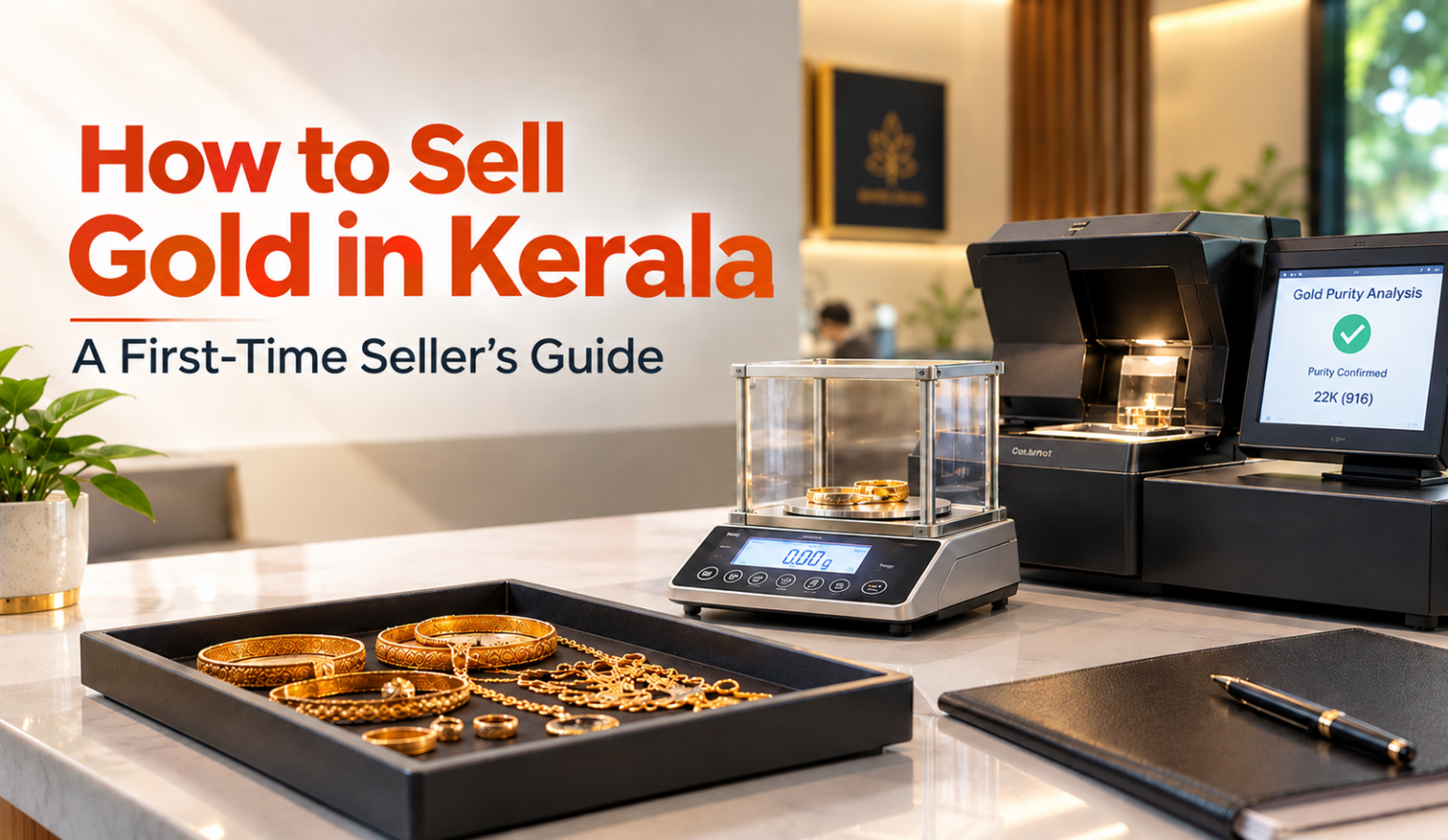
This is exactly what that process looks like at Best Money Gold, step by step, so that by the time you walk in, nothing about it feels unfamiliar. If this is your first time selling gold altogether, it’s also worth reading our first-time seller’s guide alongside this one, since purity testing is just one part of the full visit.
Why Testing Comes Before Any Price Discussion
At a trustworthy gold buyer, purity testing always happens first, before a single rupee figure is mentioned. This order matters more than it might seem. If a number is quoted before testing, it’s based on assumption, on a hallmark stamp that might be worn or unreliable, or simply on how a piece looks. Neither you nor the buyer actually knows what the gold is worth yet.
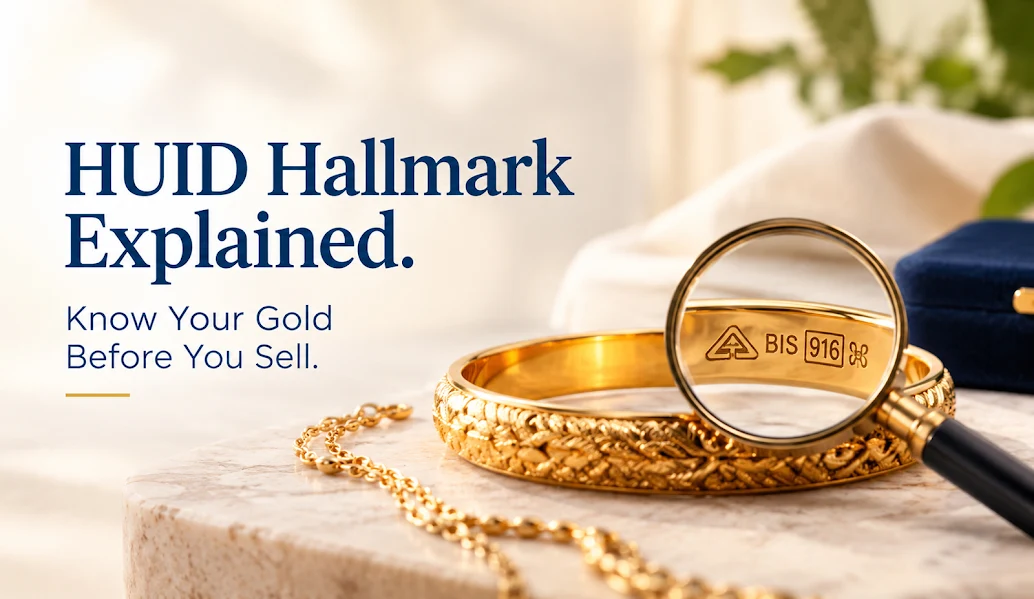
Testing removes the guesswork. It confirms the real purity, whether that’s 22KT, 18KT, or something else entirely, and that confirmed number becomes the foundation for everything that follows. Our guide to 22KT, 18KT and 916 hallmark gold covers what those specific purity levels mean, if you want the background before reading further.
The Testing Process, Step by Step
Here’s what actually happens once your jewellery is handed over at the counter:
Step 1: Visual inspection. The piece is examined for hallmark stamps, obvious wear, stones, enamel work, or anything that isn’t gold, since these all factor into how the final weight and value are calculated. This applies just as much to broken or damaged pieces as it does to jewellery in good condition, as covered in our guide to selling old, broken and scrap gold.
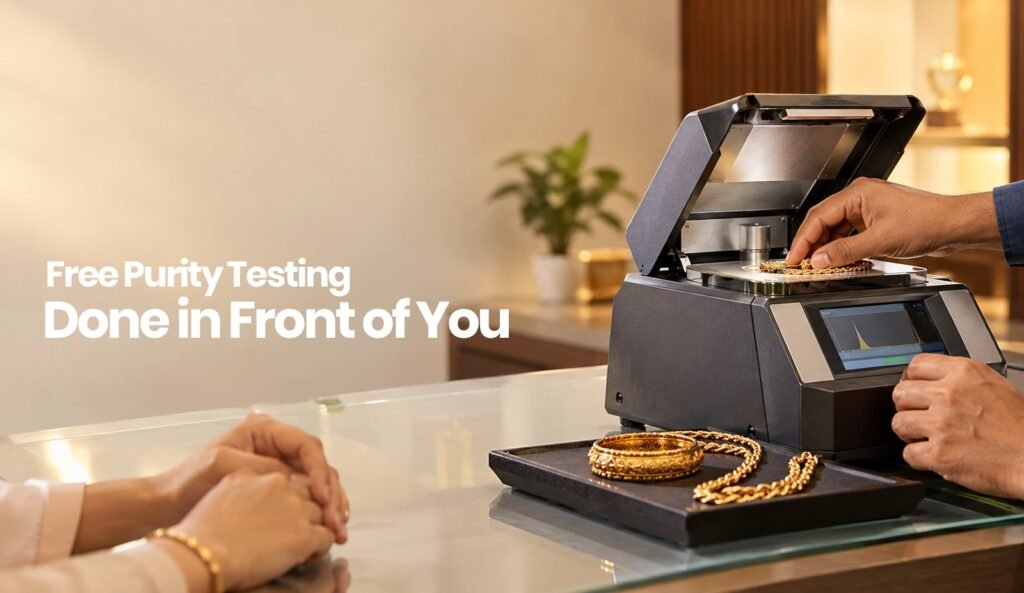
Step 2: Purity testing. Your gold’s actual karat is verified using standard purity-testing methods used across the gold trade. (The exact testing method used at each Best Money Gold branch should be confirmed internally before this section is finalized for publication, so the specific technique named here matches what happens in practice.) This step is where the real number is established, independent of any stamp or assumption.
Step 3: Weighing. Once purity is confirmed, your jewellery is weighed on a calibrated scale, in full view. This is the second half of the two numbers that determine your offer.
Step 4: Calculation. Purity and weight are combined with the day’s applicable rate to arrive at a value. This is a straightforward calculation, not a negotiation starting point that gets adjusted downward later.
Step 5: The offer. You’re told the confirmed purity, the weight, the rate applied, and the resulting price, in that order, so each number can be checked against the last.
Before any of this begins, you’ll also need valid ID on hand. Our documentation checklist covers exactly what to bring so there’s no delay once testing starts.
What You’re Allowed to Watch and Ask
Transparency only means something if you can actually see it happen. At Best Money Gold, you’re welcome to watch each of these steps as they happen at the counter, not from across the room. You can ask what purity result came back and why. You can ask what rate is being used for that specific purity today. You can ask to see the weight on the scale yourself.
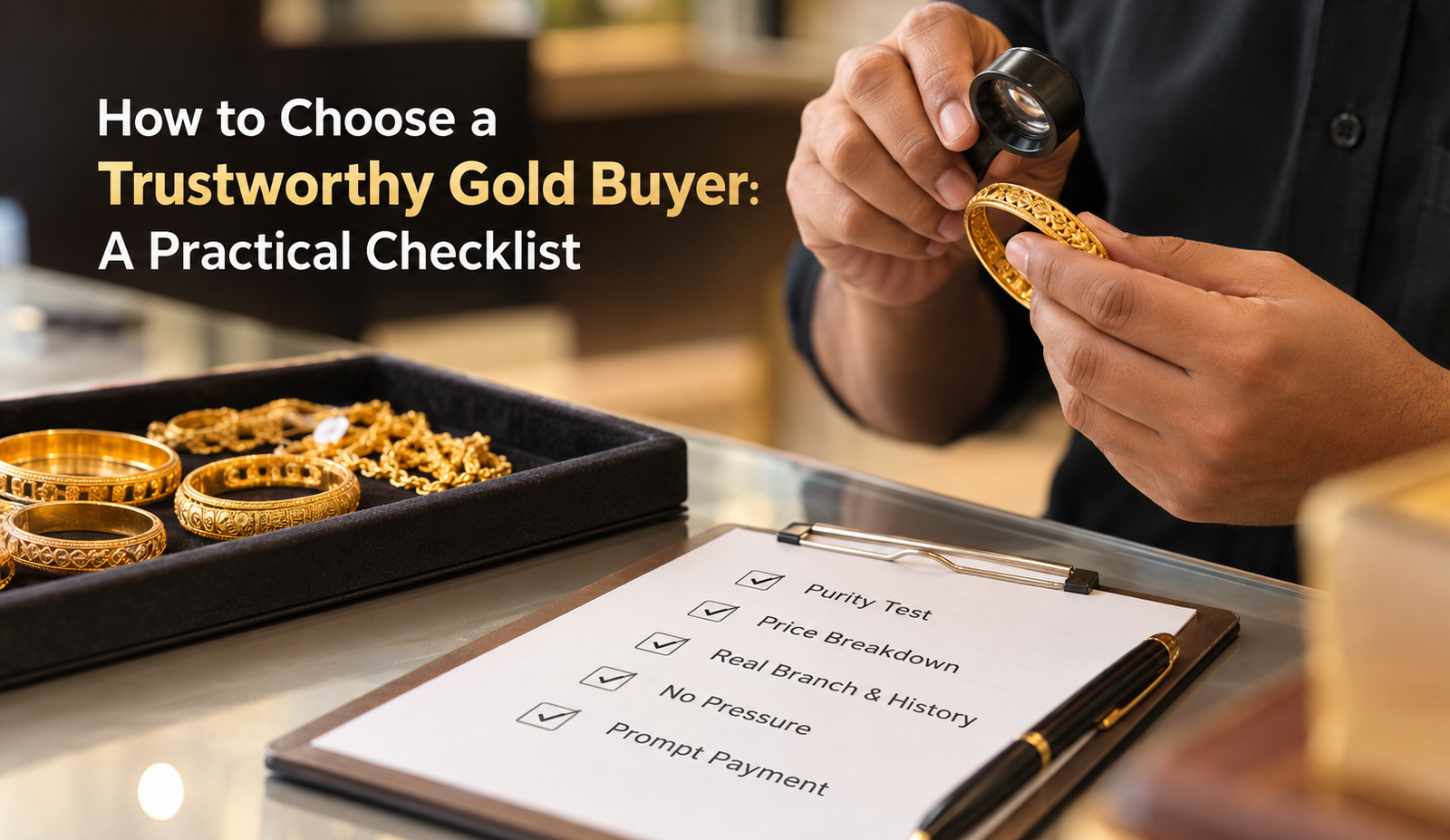
None of these questions should make a buyer defensive. If a buyer becomes vague, rushes past a question, or discourages you from watching the test itself, that’s worth noticing before you go any further. A process built on transparency welcomes scrutiny rather than avoiding it.
How Purity Translates Into Your Offer
Once purity and weight are confirmed, the math behind your offer is simple: weight, multiplied by purity, multiplied by today’s rate for that purity. Nothing more complicated than that.
Our step-by-step guide to how we calculate your gold’s value walks through this formula in more depth, including why making charges from your original purchase don’t factor into the resale price, a distinction also explained in our post on making charges and resale value. Purity testing is really the first half of that entire valuation story. Once it’s confirmed, the rest of the calculation follows directly from it, with no separate negotiation needed.
What to Do If You Disagree With the Result
Occasionally, a customer expects a higher purity than what testing confirms, often because a piece was purchased or gifted as “22 karat” years ago without independent verification at the time. This is a fair thing to want clarity on, and a legitimate buyer should be able to explain the result to your satisfaction.
If you have doubts about a result, you’re within your rights to ask for the test to be explained again, to ask what specifically was checked, or to decline the offer and think it over. A confirmed purity test isn’t something you’re expected to simply accept without understanding. If something still feels unclear after it’s been explained, that’s a reasonable moment to pause the transaction rather than proceed.
Testing is meant to protect both sides of the counter, you from being undervalued, and the buyer from overpaying based on an inaccurate assumption. When it’s done properly and explained clearly, there shouldn’t be much left to disagree with by the end.
Frequently Asked Questions
Is purity testing free? Yes. At Best Money Gold, purity testing is provided at no charge, before any price is discussed.
Does testing damage the jewellery? Testing is designed to confirm purity without meaningfully affecting the piece. If you have specific concerns about a particular item, it’s worth asking the branch directly before testing begins.
Can I bring my own tester’s result instead? You’re welcome to bring a prior test result for reference, but Best Money Gold conducts its own purity test as part of every transaction, since valuation is based on our own confirmed result rather than an outside one.
What documents do I need before testing begins? Just valid, government-issued ID in most cases. Our documentation checklist has the full list, including whether a purchase bill is needed.
Ready to see the process yourself? Visit the Best Money Gold homepage to find your nearest branch for a free purity test, no obligation to sell.